
When evaluating a fentanyl urine drug test, it is easy to focus on one number: the cutoff. Some fentanyl screening methods use cutoffs around 1 ng/mL, while Acutis UltraDetect™ uses a 5 ng/mL presumptive screening cutoff for fentanyl and norfentanyl. On paper, a lower cutoff may appear more sensitive. But cutoff alone does not tell the whole story. The bigger question is: What is the test actually designed to detect?
Fentanyl Disappears Faster. Norfentanyl Tells a Longer Story.
After fentanyl enters the body, the liver rapidly converts it primarily into norfentanyl, its major metabolite. Less than 8% of fentanyl is excreted unchanged, and norfentanyl is typically present in urine at higher concentrations and for longer than the parent drug. That difference can be clinically important. In a study of patients with opioid use disorder, the mean urine clearance time was approximately 7.3 days for fentanyl compared with 13.3 days for norfentanyl. So, a patient may have little or no parent fentanyl remaining while norfentanyl continues to provide evidence of prior exposure.
Where Conventional Screening Can Fall Short
Many traditional fentanyl immunoassays were developed primarily to detect parent fentanyl, with limited sensitivity to norfentanyl. Point-of-care (POC) cups may also focus mainly on the parent drug, while newer assays vary in how effectively they recognize the metabolite.
This is why simply comparing drug test cutoff levels can be misleading. A test with a lower fentanyl cutoff may still have limited ability to detect norfentanyl, which can remain in urine longer as parent fentanyl concentrations decline.
A 2024 study illustrates this gap. Researchers evaluated 92 low-positive urine specimens using LC-MS/MS and three fentanyl immunoassays. Fifty-two of the 92 specimens (57%) were confirmed positive by LC-MS/MS and detected by the norfentanyl-sensitive assay but were missed by one or both comparator immunoassays.
The finding highlights why norfentanyl sensitivity matters in presumptive screening: relying mainly on parent fentanyl can create a detection gap as fentanyl is rapidly metabolized and its concentration falls.
Why This Matters for Treatment Centers
For treatment centers, fentanyl monitoring is particularly important among patients receiving medication for opioid use disorder. Acutis Population Pulse data identified fentanyl/analog use in 14.3% of methadone patients, compared with 3.2% of patients receiving Suboxone.
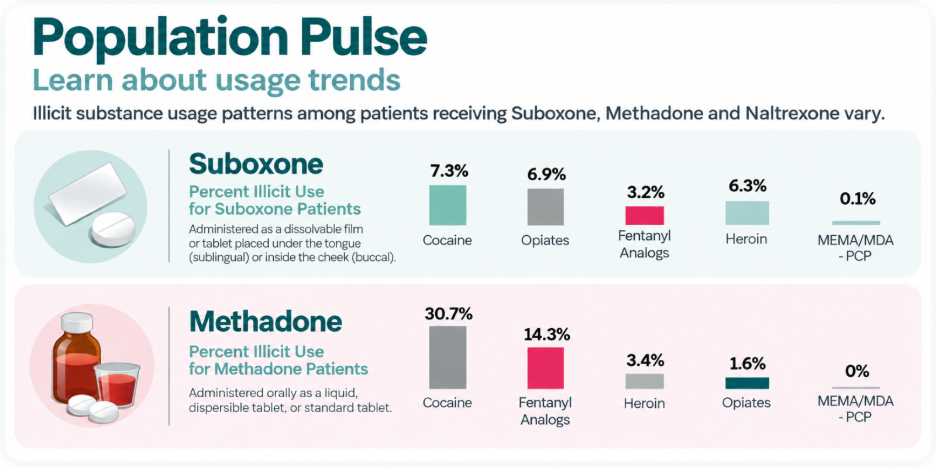
This level of co-use reinforces the need for presumptive drug testing that considers both fentanyl and its major metabolite, not simply a traditional opiate screen or a point-of-care result that may focus primarily on the parent drug.
The Acutis UltraDetect™ Difference
Acutis UltraDetect™ screens for both fentanyl and norfentanyl at 5 ng/mL.
That distinction is important: rather than relying only on detection of parent fentanyl, UltraDetect™ extends presumptive screening to its longer lasting primary metabolite, helping treatment providers identify exposure that could otherwise be more difficult to recognize as parent fentanyl concentrations decline. UltraDetect™ was developed to address limitations of traditional immunoassay based presumptive screening, including differences in cutoff thresholds, cross reactivity, and drug coverage. Acutis then supports confirmatory drug testing with LC-MS/MS when appropriate. The broader UltraDetect™ platform is designed specifically around improving first-line presumptive screening.
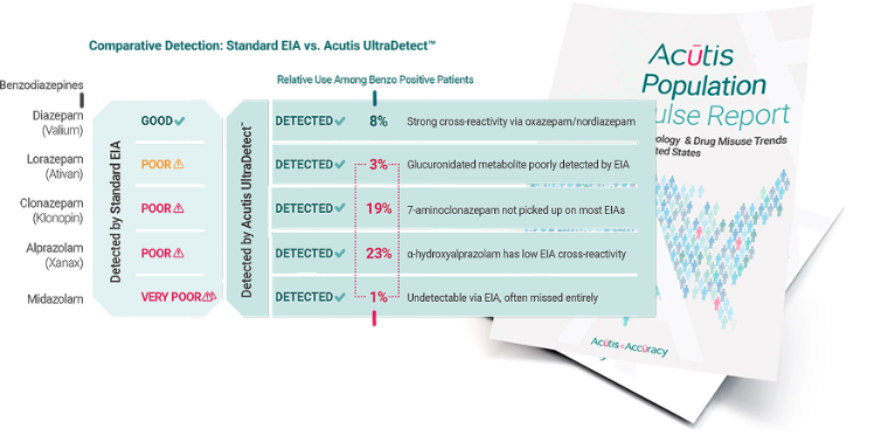
Learn more about Acutis UltraDetect™: View the UltraDetect™ booklet
Learn more about UltraDetect™ in this exclusive guide and Acutis’ clinical toxicology capabilities.
About Acutis Diagnostics
Acutis Diagnostics provides clinical toxicology solutions for treatment centers and healthcare providers navigating an increasingly complex drug landscape. With Acutis UltraDetect™, clinicians gain a high sensitivity presumptive screening approach designed to provide more clinically meaningful insight into drug exposure.
To speak with our team about clinical toxicology testing, contact sales@acutis.com