
A positive opiate result can carry serious consequences – particularly for someone in addiction treatment, pain management, drug court, or another monitored-care program. But there is a complication familiar to toxicologists: Poppy seeds can contain enough naturally occurring opiate alkaloids to affect a urine drug test. That means an unexpected morphine or codeine result can create two very different possibilities. A patient may have eaten a poppy-seed-containing food and be incorrectly suspected of heroin use. Or a patient who has used heroin may attribute the positive result to an “everything” bagel or another poppy-seed food.
For clinicians, the question is therefore not simply: “Can poppy seeds cause a positive drug test?” They can. The more useful question is: Can laboratory testing help distinguish dietary poppy-seed exposure from heroin use? Increasingly, the answer involves looking beyond morphine and codeine alone.
Why Poppy Seeds Can Affect an Opiate Drug Test
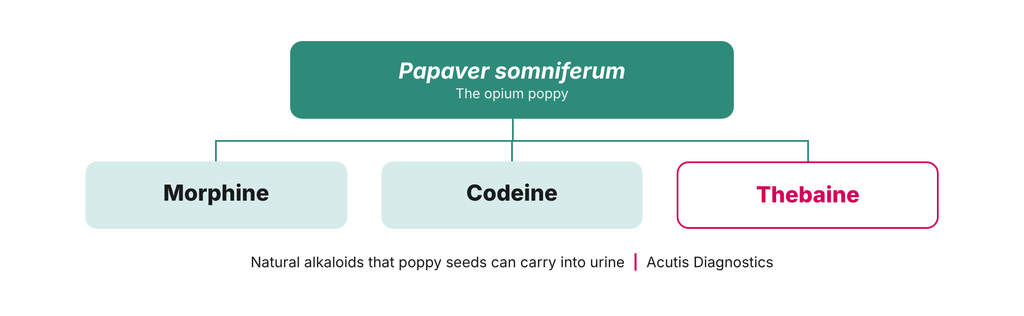
Poppy seeds come from Papaver somniferum, the same plant from which naturally occurring opiate alkaloids originate. Food-grade poppy seeds may carry varying amounts of compounds including morphine, codeine, and thebaine. How much ultimately appears in urine can vary depending on the type and amount of food consumed, the source of the seeds, processing, preparation, and time since consumption. Controlled studies have repeatedly shown that eating poppy seeds can produce measurable morphine and codeine in urine and, depending on the test cutoff, an opiate-positive result.
Dr. Gregory Hobbs points out just how variable the numbers can be. Across published studies included in his analysis, reported peak urinary morphine concentrations after poppy-seed ingestion ranged from approximately 302 ng/mL to 10,000 ng/mL. That variability is precisely why a morphine concentration by itself cannot always answer the source question.
Key takeaway
A positive urine morphine or codeine result may lead a clinician to assume heroin use. This is not necessarily the case. The challenge is determining why the drugs are present.
What About 6-MAM?
One of the most useful markers for heroin use is 6-monoacetylmorphine, or 6-MAM. Heroin is rapidly metabolized through 6-MAM before ultimately becoming morphine. Detecting 6-MAM is therefore strong evidence that heroin was used. But there is an important limitation: 6-MAM does not remain detectable for very long. As Dr. Hobbs summarizes it, 6-MAM is essentially a “rule-in,” not a “rule-out,” marker. If it is present, heroin use can be identified. But if it is absent, clinicians cannot automatically conclude that heroin was not used. That leaves an important diagnostic gap.
Morphine/codeine present + 6-MAM absent = what caused the result?
This is where thebaine becomes particularly interesting. Thebaine is another naturally occurring alkaloid found in the opium poppy. Unlike morphine and codeine, thebaine can provide additional information about the source of an unexpected opiate result. Earlier research demonstrated thebaine in urine after poppy-seed consumption and proposed it as a useful marker for dietary exposure (Cassella et al., 1997). Dr. Hobbs and colleagues later developed a sensitive LC-MS/MS method for urinary thebaine and examined its behavior following consumption of two different poppy-seed-containing foods. The study demonstrated that thebaine could remain detectable in urine for up to 72 hours in some cases. Importantly, thebaine is not stand-alone proof of poppy-seed consumption. It can also occur with opium exposure, and its absence does not necessarily exclude dietary poppy seeds because detection varies over time. But in the right context, it can substantially strengthen the interpretation.
What Happened When Volunteers Actually Ate Poppy Seeds?
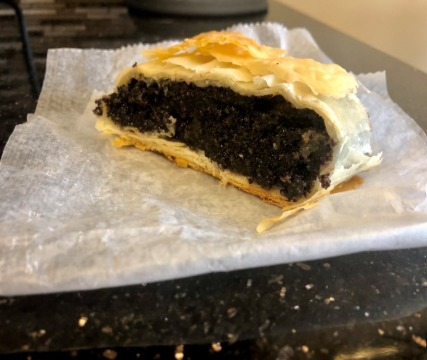
Dr. Hobbs and colleagues provide a particularly useful real-world look at the issue. In one controlled experiment, 20 volunteers consumed approximately 113 grams of Hungarian poppy-seed strudel and provided urine specimens before consumption and at 1, 4, 8, 24, 48, and 72 hours afterward.
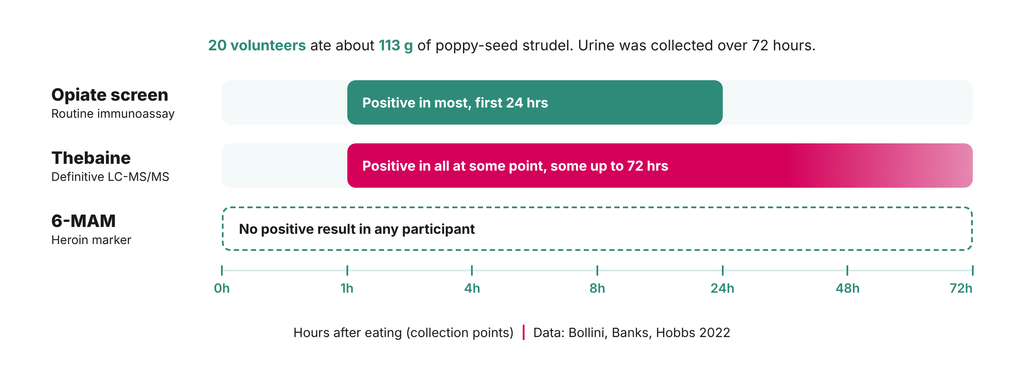
The results tell an interesting story. No participant produced a positive 6-MAM presumptive result following the poppy-seed strudel. Yet the routine opiate screen became positive in most participants during the first 24 hours. When the same specimens were evaluated for thebaine using definitive LC-MS/MS testing, every participant with available specimens became thebaine-positive at some point following consumption. Thebaine remained detectable in some individuals as late as 72 hours. A separate poppy-seed bagel experiment showed the same broader pattern: routine opiate positivity declined relatively quickly, while thebaine could still be detected in multiple specimens at later collection times. That distinction matters. A patient may no longer have a straightforward opiate-screen pattern by the time the specimen reaches the laboratory, but thebaine may still provide useful evidence that dietary poppy seeds were recently consumed.
The Morphine-to-Codeine Pattern Adds Another Clue
Thebaine becomes even more informative when considered alongside morphine and codeine concentrations. Dr. Hobbs compared results from known heroin-positive specimens with the poppy-seed studies. Among 70 specimens positive for 6-MAM, nearly all contained morphine and codeine, while only four had detectable thebaine. Average concentrations in this known-heroin group were:
- Morphine: 5,283 ng/mL
- Codeine: 315 ng/mL
- Morphine-to-codeine ratio: 16.7
The dietary pattern looked very different. At the point of peak morphine concentration in the poppy-seed bagel study, the averages were approximately:
- Morphine: 41.72 ng/mL
- Codeine: 268 ng/mL
- Morphine-to-codeine ratio: 0.160
In other words, morphine predominated strongly in the known-heroin group, whereas codeine predominated in the poppy-seed pattern. Real-world laboratory data reinforce that observation. Among 141 thebaine-positive specimens, 132 showed codeine greater than morphine. This does not mean that a single ratio can independently diagnose heroin or dietary exposure. It means the laboratory now has multiple pieces of evidence to interpret together.
How the Results Fit Together
A practical way to think about an unexpected opiate result is:
| Laboratory pattern | What it may suggest |
| 6-MAM positive | Strong evidence of heroin use |
| Thebaine positive + codeine > morphine | Strong support for recent poppy-seed exposure |
| Thebaine positive + morphine > codeine | Poppy seeds alone are less likely; additional investigation may be warranted |
| Thebaine negative + morphine > codeine | Poppy seeds are less likely |
| Thebaine negative + codeine > morphine | Poppy-seed exposure remains possible |
This framework closely follows the interpretive approach presented by Dr. Hobbs. He also emphasizes two important limitations: thebaine may be detected with opium exposure, and thebaine does not remain positive for long periods in every patient. A positive 6-MAM result indicates heroin use regardless of the other findings. So this is not about replacing clinical judgment with a single biomarker. It is about reducing uncertainty.
When an “Everything Bagel” Actually Matters
The clinical value becomes clearer in the case presented by Dr. Hobbs. A 34-year-old man with a history of opioid use disorder was receiving Suboxone and was being monitored under drug-court supervision. After approximately nine months of documented treatment adherence, an instant urine test was unexpectedly positive for opiates. Further testing identified codeine, and the patient said he had recently eaten an “everything” bagel.
A second urine specimen collected seven hours later was negative on the routine opiate screen. Definitive testing found codeine at 33.9 ng/mL, below the laboratory’s 50 ng/mL reporting cutoff and importantly, thebaine was detected. After consultation with the laboratory, the patient’s treatment team presented the findings to the court as evidence consistent with poppy-seed consumption. The patient was not sanctioned and remained in treatment. This is why interpretation matters. An unexpected toxicology result is not merely a laboratory number. In treatment programs, it can affect trust, clinical decisions, privileges, court outcomes, and potentially whether a patient remains engaged in care.
The Bigger Lesson for Treatment Centers
Drug testing is an important tool in addiction medicine but its value depends on interpretation. ASAM notes that drug testing can support assessment, treatment monitoring, and recovery when it is used appropriately and within the broader clinical context. For a patient with an unexpected opiate result, the most useful question may therefore not be: “Did the opiate screen turn positive?” Instead, clinicians should ask: What combination of results best explains the patient’s exposure? That may mean looking beyond a presumptive screen to definitive testing, 6-MAM, thebaine, morphine, codeine, their relative concentrations, timing, medication history, and the patient’s account.
So, Is the Poppy-Seed Problem Solved?
Not completely. No single marker eliminates every ambiguity. But the combination of thebaine, 6-MAM, and morphine-to-codeine patterns can provide considerably more information than morphine or codeine alone, helping laboratories and clinicians distinguish between competing explanations for an unexpected urine opiate result. That is the central conclusion of Dr. Hobbs’ work. For patients in opioid use disorder treatment, that additional context can make the difference between simply reporting a positive test and understanding what the result actually means.
Beyond a Positive Opiate Result
At Acutis, definitive toxicology testing can provide more context than a positive or negative opiate result alone. By evaluating markers such as morphine, codeine, 6-MAM, and thebaine, together with their concentration patterns, the laboratory can help clinicians better understand whether an unexpected result is more consistent with heroin use, dietary poppy-seed exposure, or requires further investigation.
About Acutis Diagnostics
Acutis Diagnostics provides comprehensive clinical toxicology services for treatment centers, behavioral health organizations, pain-management practices, and healthcare providers. Our focus is not only generating laboratory results but helping providers understand toxicology findings within the broader clinical picture. For questions about opiate testing, current test-menu coverage, or result interpretation, contact service@acutis.com.

References
- Bollini SM, Banks JF, Hobbs GA. Urine thebaine determination by liquid chromatography tandem mass spectrometry after poppy seed consumption. Drug Testing and Analysis. 2022;14(8):1539–1546. doi:10.1002/dta.3274.
- Cassella G, Wu AHB, Shaw BR, Hill DW. The Analysis of Thebaine in Urine for the Detection of Poppy Seed Consumption. Journal of Analytical Toxicology. 1997;21(5):376–383. doi:10.1093/jat/21.5.376.
- Smith ML, Nichols DC, Underwood P, et al. Morphine and Codeine Concentrations in Human Urine Following Controlled Poppy Seeds Administration of Known Opiate Content. Forensic Science International. 2014;241:87–90. doi:10.1016/j.forsciint.2014.04.042.
- Samano KL, Clouette RE, Rowland BJ, Sample RH. Concentrations of Morphine and Codeine in Paired Oral Fluid and Urine Specimens Following Ingestion of a Poppy Seed Roll and Raw Poppy Seeds. Journal of Analytical Toxicology. 2015;39(8):655–661. doi:10.1093/jat/bkv081.
- Reisfield GM, Teitelbaum SA, Jones JT. Poppy Seed Consumption May Be Associated with Codeine-Only Urine Drug Test Results. Journal of Analytical Toxicology. 2023;47(2):107–113. doi:10.1093/jat/bkac079.
- Jarvis M, Williams J, Hurford M, et al. Appropriate Use of Drug Testing in Clinical Addiction Medicine. Journal of Addiction Medicine. 2017;11(3):163–173. doi:10.1097/ADM.0000000000000323.