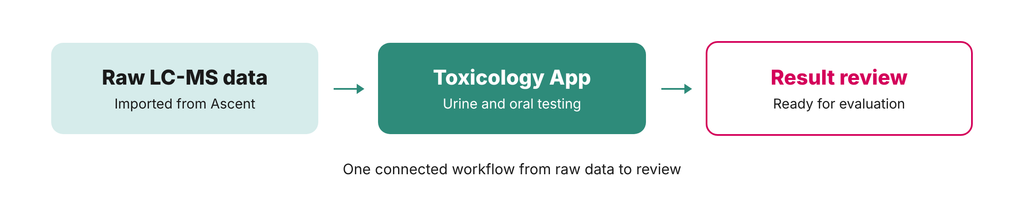
Every toxicology result begins with data but turning that data into a finalized laboratory result requires multiple checks, comparisons, rules, and review steps. To make that process more consistent and efficient, Acutis Diagnostics is introducing a new Toxicology application designed to automate and standardize the processing and reporting of urine and oral toxicology test results.
The application brings laboratory data, patient history, medication information, result review, and reporting into one connected workflow. It imports raw LC-MS output files directly from Ascent and supports four testing categories: Urine Screen, Urine Confirms (Pain), Oral Screen (OFPS), and Oral Confirms. Once the data is imported, the application evaluates ordered tests, direct confirms, and reflex testing using predefined mappings, creating a more structured path from raw output to result review.
That process becomes more meaningful when current results are considered in context. The application compares findings with patient history to identify patterns such as New Patient, Consistent, History Mismatch, First Screen, and First Confirm. Medication information is also incorporated using Positive, Negative, and No Medication Provided priorities, while predefined cutoff and concentration rules help determine result classifications and the appropriate next action. Together, these checks help standardize how results are evaluated before they move forward.
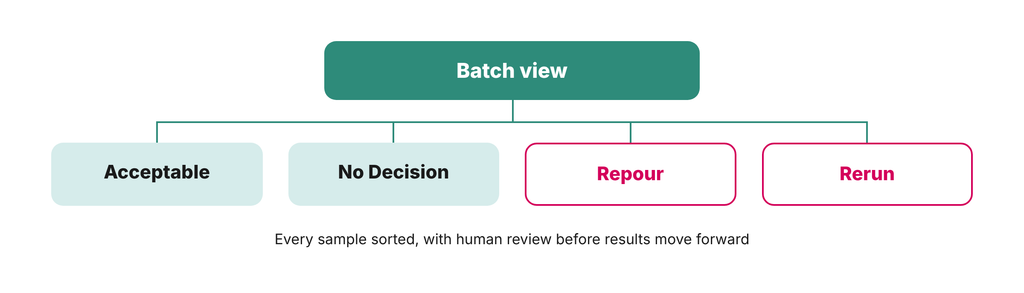
For laboratory teams, the application also provides clear batch-level visibility, including samples categorized as Acceptable, No Decision, Repour, or Rerun. It supports workflows such as Partial Rerun, Vacutainer Rerun, Screen-to-Confirm reflex testing, Screen Only panels, and add-on testing. By bringing these workflows into the same application, teams can more easily identify samples that require additional review, retesting, or action while reducing unnecessary manual processing. Human oversight remains an important part of the process, with users able to review and edit concentrations, results, and actions when necessary, and comments required for key concentration or decision changes.
Once results are finalized and meet the required criteria, eligible findings can be transferred to LabDAQ, while results requiring further review or retesting remain restricted. For Acutis, the new Toxicology application represents another step toward a more automated, standardized, and connected laboratory workflow, helping turn complex testing data into clearer, more consistent laboratory decisions. To learn more about Acutis Diagnostics and our clinical toxicology capabilities, contact us at service@acutis.com