A positive amphetamine drug test can mean prescribed Adderall, illicit methamphetamine, or a medication with a similar structure that reacts with the screen. Treating every positive the same way can lead to the wrong clinical decision. Accurate amphetamine testing and interpretation starts with knowing which test produced the result and what clinical toxicology confirmation can add.
Screening vs. Confirmation Testing
Most testing starts with an amphetamine screen, which is usually an immunoassay. This method relies on antibody binding and is highly affected by a molecule’s shape and charge, so it can react with substances of similar structure to the target1,2. A positive screen should be followed by amphetamine confirmation using a more specific technique, such as mass spectrometry. This identifies the exact drug and can rule out false positives1.
What Causes a False Positive for Amphetamines?
Medications reported to trigger a false positive amphetamine screen include pseudoephedrine, labetalol, bupropion, trazodone, and chlorpromazine1. A patient taking one of these may screen positive without using any stimulant. That is why a positive amphetamine urine test on a screen alone should not be treated as final.
Amphetamine vs. Methamphetamine: Reading the Pattern
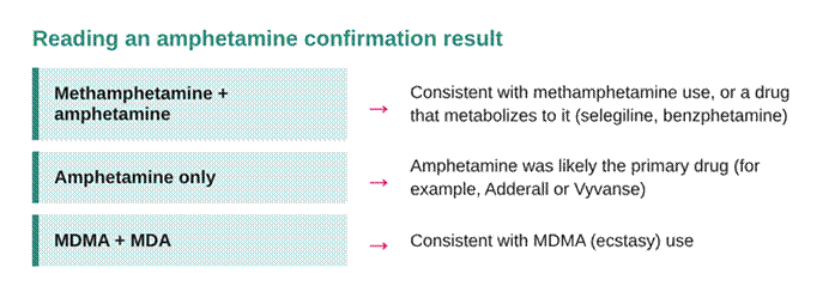
Methamphetamine is metabolized to amphetamine, so both can appear in urine after methamphetamine use. Amphetamine does not convert back to methamphetamine, so amphetamine alone suggests amphetamine was the primary drug3. MDMA is metabolized to MDA3.
Some prescriptions also produce these results. Selegiline, famprofazone, and benzphetamine are metabolized to methamphetamine and amphetamine, while clobenzorex is metabolized to amphetamine3. Amphetamine, methamphetamine, MDMA, and MDA are all part of the Acutis comprehensive testing menu.
What About Nasal Decongestant Inhalers?
Some over-the-counter decongestant inhalers contain l-methamphetamine (levmetamfetamine), a weak stimulant. It is also a metabolite of selegiline4. The Vicks VapoInhaler had l-methamphetamine removed in early 2016, but other OTC inhalers still contain it, and older Vicks inhalers may remain in medicine cabinets5.
Routine screening and confirmation tests do not separate this form from illicit methamphetamine1. When methamphetamine shows up unexpectedly, ask about inhaler use and selegiline prescriptions before drawing conclusions.
How Long Do Amphetamines Stay in Your System?
Amphetamine and methamphetamine are generally detectable in urine for up to 3 days, and MDMA and MDA for up to 2 days. Actual detection time depends on dose, frequency of use, and individual metabolism3. In one study of healthy adults taking 20 mg of Adderall daily for five days, urine amphetamine stayed at or above 500 ng/mL for up to about 60 hours after the last dose6. Adderall levels in a urine test should be read with dose timing in mind
When an Expected Positive Comes Back Negative
A negative result in a patient prescribed a stimulant is not always nonadherence. Methylphenidate (Ritalin, Concerta) is not an amphetamine and needs its own test, ideally with its metabolite, ritalinic acid. Dose timing, missed doses, and dilute urine can also explain an unexpected negative.
Why This Matters for Treatment Centers
For behavioral health, pain management, and addiction treatment programs, a positive amphetamine drug test can affect trust, treatment plans, and sometimes legal outcomes. Confirmation testing helps separate prescribed use, illicit use, and false positives. Results should support, not replace, clinical judgment.
About Acutis Diagnostics
Acutis Diagnostics provides comprehensive clinical toxicology solutions for treatment centers and healthcare providers supporting patients with substance use disorders. To learn more about amphetamine testing, contact service@acutis.com or talk to our team.
References
- Sethi R, Din A, McAllister R, Lester A. I have never used methamphetamine, but my urinalysis says I do. Prim Care Companion CNS Disord. 2018;20(5):17l02129.
- Moeller KE, Kissack JC, Atayee RS, Lee KC. Clinical interpretation of urine drug tests: what clinicians need to know about urine drug screens. Mayo Clin Proc. 2017;92(5):774-796.
- Mayo Clinic Laboratories. Amphetamine-type stimulants (ATS): drug book.
- National Laboratory Certification Program. Methamphetamine enantiomers: analysis and result interpretation. Drug Testing Matters. January 2013.
- Cody JT, Valtier S, Nelson SL. Amphetamine excretion profile following multidose administration of mixed salt amphetamine preparation. J Anal Toxicol. 2004.